Why Artificial Roof Coverings Master Harsh Midwestern Weather Issues
Anyone who has actually invested a few years owning a home in the Midwest learns the very same lesson by hand: roof products are evaluated much less by exactly how they view on a warm mid-day and more by just how they execute in late January, during a spring hailstorm, or after a week of freeze-thaw cycles. The roof covering over a Midwestern home needs to deal with heat, subzero cold, ice, wind, sleet, hefty rain, and abrupt weather swings that would be unusual in several various other regions. That combination subjects the strengths and weak points of every roof in a hurry.
This is where artificial roof coverings have actually carved out a serious reputation. Not since they are fashionable, and not because they assure some miracle treatment for every single roof covering problem, yet due to the fact that the product scientific research behind them align abnormally well with the environment needs of states like Illinois, Indiana, Wisconsin, Michigan, Iowa, and Missouri. In my experience, property owners commonly begin the conversation concentrated on appearance, particularly if they admire cedar shake, slate, or other high-end accounts. By the time the discussion is over, they are normally paying equivalent attention to effect resistance, weight, attaching methods, maintenance expectations, and exactly how the roof will certainly act after ten Midwest winters.
Synthetic roofing has grown well beyond the novelty phase. Today's building synthetic roof covering items are engineered to mimic all-natural materials while dealing with a number of the susceptabilities that have actually historically made those materials tough to own in serious environments. For house owners taking into consideration a long-term financial investment, especially those considering artificial roof covering substitute options versus asphalt, cedar, or natural slate, the discussion is entitled to a close, practical look.
The Midwest is distinctly tough on roofs
Some climates are predictable. The Midwest is not. A roofing system below may bake under summer sun at temperatures hot enough to soften low-grade materials, then encounter sudden thunderstorms with wind-driven rain. In winter season, that very same roof covering might hold wandering snow, develop ice along eaves, and cycle with duplicated freezing and thawing. Spring typically brings hail storm, and fall can bring temperature level swings huge sufficient to anxiety seals, flashings, and fasteners.
Those fast transitions matter. Roof materials broaden and agreement. When that movement is excessive, or when a product comes to be weak in the cold, little weak points begin to show up at ridges, valleys, around infiltrations, and along edges where wind pressure is best. Property owners do not always see the earliest indicators from the ground. What they discover later on is a discolor on a ceiling, raised tabs, missing out on items after a storm, or a repair work estimate that gets here years sooner than expected.
That's one factor synthetic roof have actually gotten traction in places like Chicagoland. They are not unsusceptible to negative setup or poor ventilation, since no roofing is, but top quality synthetic products are constructed to endure a bigger series of environmental stress and anxiety than lots of typical materials. In an environment that regularly tests every component on the roofing assembly, that tolerance matters.
Material design, not marketing, describes the appeal
A great deal of the value in costs synthetic roof covering boils down to what it is constructed from and exactly how it is made. The precise formula differs by brand, however several artificial roof covering roof shingles are created from engineered polymers, recycled compounds, virgin resins, or blends developed to provide adaptability, longevity, and impact resistance without the delicacy connected with natural slate or the maintenance worry of wood.
That flexibility is a major advantage in cold weather. Natural products can fracture when struck by hailstorm or when worried during a deep freeze. Lower-end items might become weak enough that straightforward roofing traffic from a solution professional can trigger damages in winter. Excellent artificial materials often tend to stay more steady throughout bigger temperature arrays. They can absorb pressure much better, recoup better from effect, and withstand splitting in ways that matter in the area, not simply in item brochures.
Weight is one more functional factor. Standard slate is lovely, but it is hefty enough that structural capability enters into the discussion. Some homes can sustain it. Others call for reinforcement, which alters the spending plan quickly. Synthetic alternatives provide the appearance of slate or shake without including that same structural problem. For lots of homeowners, particularly those intending an artificial roofing replacement on an existing home, that can simplify the job substantially.
Hail resistance is where artificial roofs often separate themselves
If you have actually ever before walked a neighborhood after a Midwest hail event, the pattern becomes noticeable. You will certainly see bruised asphalt, cracked ceramic tile, nicked steel devices, and insurance policy insurers relocating from home to home. Hailstorm is one of the most pricey kinds of roofing system damages in the region, not only since it causes immediate effect damages, yet because it shortens the service life of materials that survive the initial storm.
Many premium artificial roofing products are created with impact resistance as a core marketing point. That issues due to the fact that hail efficiency is not nearly whether a roofing system leaks the roofing cintractor next day. It is likewise about whether the product has been endangered in such a way that will cause early failure two or three seasons later on. A roofing can look appropriate from the street and still have cracks, granule loss, or covert damages that speeds up aging.
On higher-end homes, specifically those utilizing synthetic roofing for high-end homes, owners are frequently trying to shield both performance and appearance. All-natural slate can chip. Cedar can split. Some synthetic alternatives manage influence with less visible damages while protecting the desired look of the roofing system aircraft. That is a meaningful benefit in areas where curb appeal brings real value.
I have seen instances where homeowners at first rejected synthetic items since they assumed "composite" suggested light-weight in a bad sense, virtually non reusable. Then they dealt with full-size samples and saw screening information on impact performance, fire scores, and wind resistance. The understanding altered quickly. A good artificial roofing must not really feel flimsy. It needs to feel engineered.
Freeze-thaw resilience makes a silent yet important difference
Hail obtains interest due to the fact that it is dramatic. Freeze-thaw damages is quieter, slower, and equally as expensive over time. Water discovers its means into tiny openings, ices up, increases, and widens those openings. Repeat that cycle often enough and the roof covering setting up starts to wear away around weak spots. This is one factor the Midwest is so unforgiving to products that soak up moisture or become delicate in the cold.
Synthetic roof coverings carry out well here partly since most of them withstand moisture absorption far better than all-natural products. Wood can hold moisture. Some mineral-based materials are prone to breaking when water breach and cold combine. Engineered synthetics, by comparison, are frequently less permeable and less most likely to suffer the same internal breakdown.
That does not eliminate the requirement for proper underlayment, ice and water guard, air flow, and blinking information. It merely implies the noticeable roofing product is much less most likely to end up being the weak spot. For a property artificial roof project, that can equate into less frustrations in late wintertime when ice dams, snow buildup, and attic room warm loss begin subjecting every mistake beneath the surface.
Wind efficiency matters more than a lot of homeowners realize
Midwestern tornados are seldom gentle. Straight-line winds can be harsh, and even common storm fronts can generate gusts strong sufficient to exploit little setup mistakes. Once the edge of a roof system starts to fail, the trouble can spread out quickly. That is why securing patterns, starter training courses, ridge outlining, and perimeter metal issue so much.
Quality synthetic roof are frequently examined for high wind performance, and several items are manufactured with interlocking or safe fastening layouts that aid them hold in unfavorable conditions. This is not only a product story. It is an installment tale. A roofing system is only as dependable as the team that installs it. Also superior products can underperform when the installer ignores maker specs or cuts edges on deck preparation.
That is why house owners trying to find artificial roof covering Chicago solutions or a synthetic roofer Chicagoland must pay close attention to installer experience. An artificial roof covering business that mainly mounts typical asphalt and only periodically collaborates with specialty composites may not come close to outlining with the exact same precision as a group that on a regular basis manages architectural artificial roof covering. The difference appears where it matters most, around valleys, smokeshafts, skylights, hips, ridges, and shifts between roofing system planes.
Appearance is part of the formula, specifically in recognized neighborhoods
The efficiency situation for synthetic roofings is strong, yet appearances still drive lots of acquisition decisions, especially in older suburbs, custom-home communities, and architecturally distinctive neighborhoods. Homeowners desire a roof covering that fits the design of the residential or commercial property. In position with historic impact or high style criteria, basic three-tab or even conventional dimensional asphalt can keep an eye out of place.
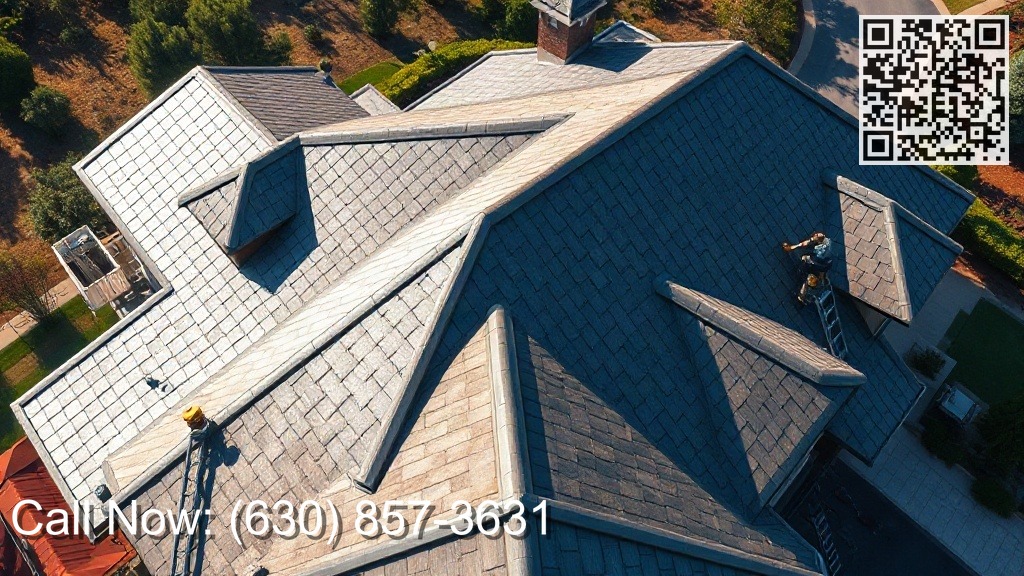
This is where building artificial roofing has actually come to be particularly compelling. The very best products do not merely imitate slate or cedar from a distance. They duplicate texture, darkness lines, variation in density, and color deepness in such a way that reads as intentional and fine-tuned. On a steep-slope home with popular rooflines, that visual effect can be substantial.
For home owners seeking synthetic roof covering Naperville IL or comparable upscale suv markets, the visual flexibility is usually a determining factor. Most of these homes are big sufficient that the roof is a major building attribute, not a history surface area. Artificial items allow proprietors to seek a slate or shake visual without handling the architectural, upkeep, or weather-related drawbacks that all-natural materials can generate this climate.
Lighter weight assists in both old homes and custom homes
A common misconception is that weight always amounts to high quality. In roofing, that is only partially true. Much heavier products may really feel significant, but they likewise put much more need on the structure listed below. That can complicate both brand-new building and construction and retrofit projects.
With artificial roofing systems, lighter weight frequently comes to be a functional advantage. On older homes, it may allow the proprietor to accomplish a costs look without strengthening framing. On more recent custom homes, it can offer even more design flexibility while lowering architectural tons. On complicated rooflines with turrets, dormers, flared eaves, or high pitches, lighter product can additionally make taking care of and setup much safer and even more efficient.
There is another real-world benefit. Roof teams collaborating with lighter artificial materials can usually relocate a lot more exactly and with less damage throughout artificial roofing system setup. Natural slate and ceramic tile can fracture throughout handling. Wood can split or differ in high quality from item to item. Synthetic products are typically much more regular, which assists seasoned artificial roof installers keep look and placement across large roof covering areas.
Maintenance has a tendency to be a lot more manageable
No roof is maintenance-free, and any person promising that ought to be treated with caution. Branch abrasion, clogged gutters, poorly vented attics, failed sealants, and storm damage can impact any material. Even so, artificial roofing usually reduces the routine upkeep worry compared to cedar shake and a few other typical products.
Wood roofing systems, for example, typically call for continuous tracking for dampness retention, mold and mildew, mold, insect activity, and splitting. All-natural slate can last a long time, synthetic roof installation yet fixings can be specialized and costly, especially when matching products or working about breakable tiles. Asphalt is less complex, yet it can shed granules, crinkle, or age erratically under serious weather stress.
An appropriately mounted residential artificial roofing system typically lands in a valuable happy medium. It can provide a high end look with much less regular fixing demand, fewer worries about rot or insect damages, and better durability after typical weather events. That does not mean owners can disregard examinations. It implies the roofing is much less most likely to penalize disregard immediately.
Installation top quality determines whether the product lives up to its promise
If there is one point I would worry to any house owner, it is this: the product is only half the work. The installer identifies the rest.
A capable synthetic roofing contractor understands that specialized items require greater than common roofing behaviors. Deck condition need to be assessed truthfully. Underlayment option has to match environment demands. Flashing details ought to be updated where needed, not reused due to the fact that it saves time. Penetrations require mindful treatment. Air flow needs to be attended to, specifically in homes with a history of ice damming or uneven attic temperatures.
When home owners talk to a synthetic roof covering company, they ought to ask specific concerns concerning previous jobs, crew training, producer experience, and exactly how the business takes care of changes and accessory information. A strong service provider will certainly respond to concretely, not vaguely. They will discuss consumption and exhaust air flow, ice barrier positioning, fastening methods, and why specific information matter in neighborhood conditions. A weak contractor typically moves the discussion back to price.
That is particularly crucial in markets like artificial roofing Chicago, where weather condition direct exposure is intense and architectural designs vary extensively. A reduced quote can become costly if the installer neglects the useful needs of the home.
Cost is greater upfront, yet that is not the whole calculation
Synthetic roofing typically costs extra in advance than standard asphalt tiles. That much holds true. For some homeowners, the premium is substantial enough to rule it out quickly. For others, the choice is much less concerning entrance price and even more concerning lasting value.
A roofing system ought to be judged over its life span, not just by the contract amount joined installment day. If an artificial roof covering uses far better resistance to hail, wind, fracturing, and weather-related aging, there can be less repair services, less early substitutes, and less cosmetic wear and tear over time. On homes where appearance issues, staying clear of a visibly tired roof after a relatively short duration has value as well.
Insurance factors to consider can additionally get in the picture, though this varies by service provider and policy. Some impact-resistant items might get discount rates in specific cases, while others might not. Homeowners need to validate details straight with their insurance company as opposed to assuming a benefit.
The far better method to think of price is to ask a more useful inquiry: what am I buying beyond the material itself? If the solution includes enhanced storm durability, a costs building appearance, reduced maintenance pressure, and the possibility of a much longer solution horizon, after that the greater first investment can make sense, specifically for lasting owners.
Where artificial roof makes the most sense
Synthetic roofing is not instantly the most effective suitable for every home. Budget-driven projects on modest residential properties may be much better offered by high-quality asphalt if the proprietor expects to move quickly. Some historical districts have material restrictions that call for cautious evaluation. And not all synthetic items are equal. There is a variety between commodity-grade imitation items and well-engineered premium synthetic roofing.
Still, synthetic roof coverings are specifically engaging in a few usual situations:
- homeowners replacing cedar or slate however desiring much less maintenance and better storm resistance
- custom homes where the roof is a major visual feature
- properties in hail-prone or wind-prone locations across the Midwest
- long-term ownership situations where lifecycle value matters greater than the lowest bid
- projects where structural weight is a concern but a high-end look is still desired
Those usage cases show up often in the Midwest since the region incorporates extreme climate with a big housing stock that consists of every little thing from century-old homes to extensive brand-new builds. Few roof covering classifications offer that variety as successfully as artificial roof covering systems.
A much better suit for the environment homeowners actually live in
The reason synthetic roof coverings master rough Midwestern weather conditions is not mystical. The region requires a material that can lose without coming to be a maintenance problem, and premium synthetic products are built with precisely that difficulty in mind. They resist influence much better than numerous standard products, handle freeze-thaw stress and anxiety well, prevent the weight charges of slate, and deliver a degree of layout adaptability that appeals to both sensible and design-conscious homeowners.
For a homeowner evaluating artificial roofing setup, the most intelligent method is to treat it as both a material choice and a specialist choice. The product has to be proven. The installer must be experienced. When those 2 pieces align, the result is a roof covering that does greater than make it through Midwest climate. It remains appealing, dependable, and structurally practical with the sort of periods that expose weak choices fast.
That is why many property owners that begin the procedure trying to find a costs appearance wind up choosing artificial for an extra grounded reason. It fits the environment. And in the Midwest, that might be the most vital function a roof covering can have.
When Quality Matters
Salvo Architectural Roofing Contractors
566 West 5th Ave Naperville, IL 60563
(630) 857-3631
 Ask ChatGPT
 Ask Grok
 Ask Perplexity
 Ask Claude
 Ask Google AI
 Ask You